Range and charging don’t match the roster
An EV assigned to a long route with no charging window ends up on a charger when it should be on a pickup.

Electric cars for employee commutes and city trips, deployed where the routes suit them. Same verified drivers, same coordinator, one GST invoice.
Employee commuting is one of the value chain (Scope 3) emission categories companies report under the GHG Protocol, and many listed Indian companies now disclose it in their BRSR filings.
Moving regular city routes to electric cars is one of the most direct ways to reduce those emissions. The catch is practical: range, charging and availability have to fit the routes, or service suffers.
In short: Mobilyty provides electric cabs for corporate commutes and city trips in Mumbai, Thane and Navi Mumbai. We check which of your routes suit EVs, deploy electric cars from our network there, keep other vehicles on routes that do not, and bill everything on one GST invoice.
Updated
The intention is common. Making it work on real Mumbai routes is the hard part.
An EV assigned to a long route with no charging window ends up on a charger when it should be on a pickup.
Electric fleets are smaller, so committing every trip to EVs can leave gaps when you need cars most.
Sustainability teams need trip and distance data per vehicle type. Reimbursed rides rarely give them that.
EVs where they fit your routes, with the rest of the service unchanged.
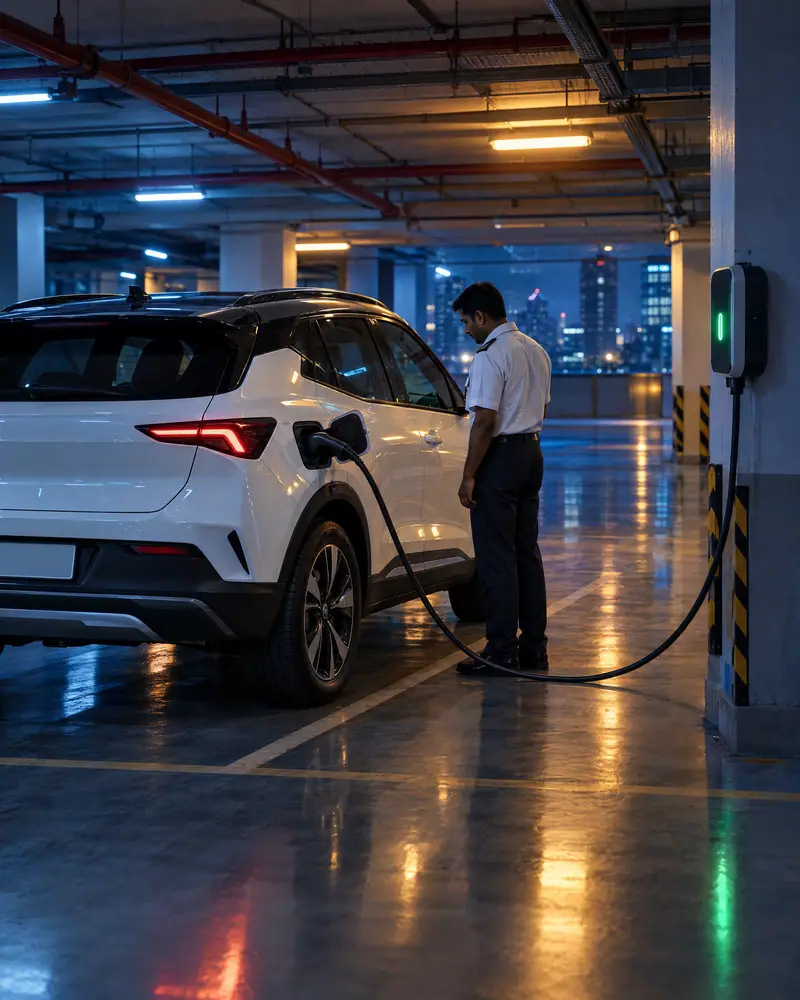
Electric cars on regular shift routes within the city, with charging planned between duties.
Electric cars for meetings and site visits inside Mumbai, Thane and Navi Mumbai.
EVs on routes that suit them, other cars on long or unpredictable routes, all on one account.

Trip-wise distance by vehicle type, so your team can estimate commute emissions for ESG reports.
Electric cars for airport runs where the trip and charging allow.
Start with a few routes, see how they run, then move more of your commute to EVs.
Route by route, so service never depends on a guess about charging.
Pickup areas, office location, shift timings and typical daily distance per car.
We mark which routes suit electric cars, given distance, timing and charging options.
Run electric cars on the best-fit routes first, and keep other cars on the rest.
Trip data by vehicle type each month, and more routes moved to EVs as they prove out.
Tick what’s true for your company. The more boxes, the stronger the case for moving routes to EVs.
Tick the boxes that apply
We’ll look at your actual routes either way. This is a quick first read.
Employee commuting is Category 7 of Scope 3 emissions under the GHG Protocol. India’s BRSR framework asks listed companies about value chain emissions, and disclosure of employee commuting is growing among large companies.
Models depend on what our network has available for your routes.
Tigor EV or similar
Daily commutes and city trips.
Nexon EV, MG ZS EV or similar
Commutes, meetings and airport runs.
eMAX 7 or similar, on request
Bigger clusters on city routes.
Electric models come from our partner network. We confirm availability for your routes before you commit.
EVs go through the same eight checks as every vehicle in our network, and their drivers too.
Hold the button to see the eight checks every partner driver and vehicle passes.
Cleared for the first trip

Best suited to trips inside Mumbai, Thane and Navi Mumbai, where distances and charging line up.
Long highway routes usually stay with other vehicles for now. We’ll tell you route by route.
The same pricing models as our other cars, set per route in writing.
An electric car and driver on a fixed monthly package for a team or route.
Best forRegular commute routes
A fixed price per pickup or drop route, by vehicle type.
Best forShift drops
4, 8 or 12 hour packages for city meetings and visits.
Best forMeetings inside the city
One rate card covering EV and other vehicles across your routes.
Best forCompanies moving gradually
Every rate is agreed in writing before the first trip, and it doesn’t surge.
Why a mixed fleet usually works better in Mumbai today.
| Factor | All trips on EVs | No EVs at all | Mobilyty |
|---|---|---|---|
| Commute emissions | Lowest on paper | Unchanged | Lower on every EV route |
| Service reliability | Gaps when charging runs short | Unchanged | EVs only where charging fits |
| Availability at peak | Limited fleet | Wide | EVs plus other cars on one account |
| Data for ESG reports | Depends on the vendor | None needed | Trip data by vehicle type |
| Billing | Separate EV vendor | Existing vendors | One monthly GST invoice |
What admin and sustainability teams ask before moving routes to EVs.
Ask us anythingElectric cabs for corporates are battery-electric cars with drivers, used for employee commutes, meetings and airport runs, booked and billed through a company account. They produce no tailpipe emissions on the trips they run.
Not always. Electric cars suit city routes with predictable timings and charging nearby. Mobilyty checks each route, runs EVs where they fit, and keeps other vehicles on long or unpredictable routes.
At your building if it has chargers, at public chargers near your office, or at operators’ depots between duties. We plan charging around your shift timings so no pickup depends on a charge.
They can reduce employee commuting emissions, which is a Scope 3 category under the GHG Protocol. Mobilyty provides trip-wise distance by vehicle type, which your team can use to estimate commute emissions.
Pricing follows the same models as our other cars: monthly, per trip or hourly. Rates depend on the vehicle and routes, and are agreed in writing before service starts. Ask for a quote for your routes.
Electric sedans and SUVs such as the Tigor EV, Nexon EV and MG ZS EV or similar, and electric MPVs on request. Exact models depend on what our partner network has for your routes.
Yes, where the route distance and charging window allow. Night drops for women employees follow the same doorstep rules and planning as all our employee transport.
Share your routes and shift timings. We mark which routes suit EVs and start with a pilot on the best-fit ones, then move more routes as they prove out.
Share your routes and shift timings. You’ll get a route-by-route EV fit and a written rate card.